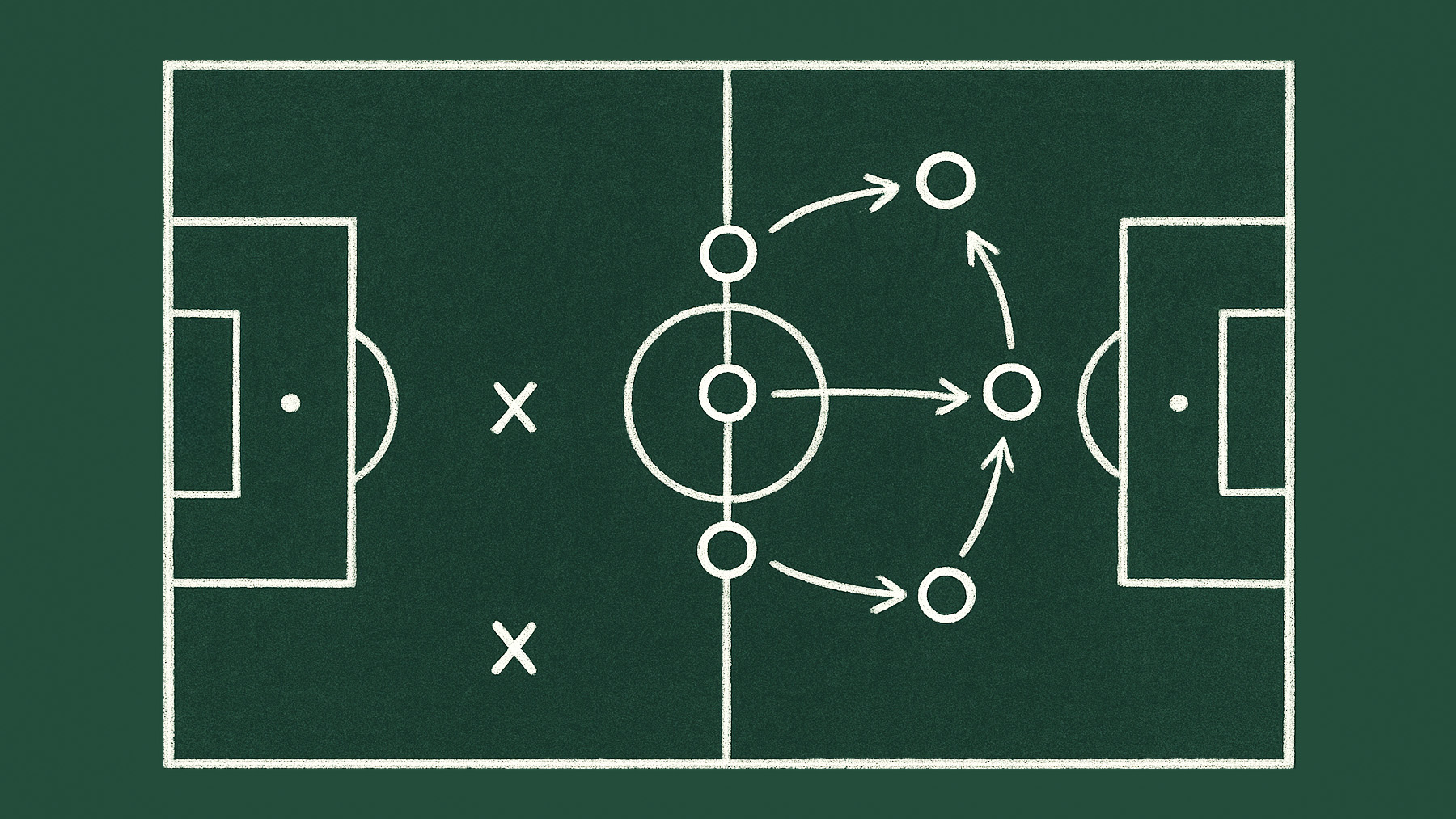
Ask any coach and they will tell you that getting the shape of a team right is one of the trickiest parts of the game. You need a formation that defends well, controls the midfield, and still creates chances in attack. If you focus too much on one area, you leave yourself vulnerable in another. That is why the most effective formations aren’t always the most exciting on paper. They’re the ones that strike the right balance. In this article, we’ll take a closer look at the formations that offer that perfect blend of structure, fluidity, and control, the ones that make teams hard to break down but dangerous going forward.
What Makes a Formation Balanced?
A balanced formation gives a team structure without limiting creativity. It holds up under pressure, adapts to different game states, and supports both attacking and defensive phases without leaving gaps. Here are the core qualities of a balanced formation:
- Defensive Stability with Attacking Support – The shape protects key zones while still getting enough players forward to threaten.
- Midfield Presence – It ensures control in central areas, which is vital for managing transitions and dictating tempo.
- Width and Depth – Balanced systems stretch the pitch naturally, creating space without compromising shape.
- Adaptability – They can shift fluidly in and out of possession, adjusting to pressing, defending, or building play.
- Clear Roles – Each player knows their job, and how it links with the rest of the team, which keeps the structure intact even under pressure.
4-2-3-1: The Modern Standard
Over the last two decades, the 4-2-3-1 has become one of the most widely used formations in world football. Its popularity is no coincidence. This shape offers a clear balance between structure and creativity, making it suitable for a variety of playing styles and player profiles.
In this formation, a back four forms the defensive foundation. The full-backs are often encouraged to push forward and provide width, while the centre-backs focus on maintaining stability. In front of them sits a double pivot in midfield. These two defensive midfielders play a crucial role in shielding the defense, recovering possession, and building attacks from deep.
Ahead of the pivot, a line of three attacking midfielders adds creative and tactical variety. Typically, a central playmaker operates between the lines, supported by wide players who either hug the touchline or drift inside. At the top of the structure is a lone striker, responsible for pressing from the front, linking play, and finishing chances.
What makes the 4-2-3-1 so effective is its flexibility. It can shift seamlessly into a 4-3-3 or a compact 4-4-2 when needed, and it works equally well for teams that play a possession-based game or prefer to hit on the counter.
Used effectively by
- José Mourinho at Real Madrid, who relied on Mesut Özil in the No.10 role and Xabi Alonso as a deep-lying passer.
- Didier Deschamps with France, building a team that combined attacking talent with defensive structure during their 2018 World Cup triumph.
4-3-3: Versatility with a Midfield Engine
The 4-3-3 is one of the most tactically flexible formations in modern football. It has been adopted by some of the most dominant teams of the last decade, thanks to its ability to combine possession, pressing, and width in a balanced structure.
At the heart of this system is the midfield trio. This can be set up with a single holding midfielder behind two more advanced players, or as a more conservative double pivot with one attacking midfielder in front. The midfield shape can shift depending on whether the team is building play, pressing, or defending deep.
The front three provides width and penetration. Wingers are key to stretching the pitch, while the central striker can either lead the line as a traditional forward or drop deep to help in buildup.
The strength of the 4-3-3 lies in its adaptability. It supports quick transitions, strong pressing structures, and controlled possession play. With the right players, it becomes a fluid system that can dominate both territory and tempo.
Used effectively by
- Pep Guardiola at Manchester City, where positional play and midfield rotations define the style.
- Jürgen Klopp at Liverpool, who used it to build a high-intensity pressing team with dynamic forward play.
3-5-2: Compactness with a Dual Threat
The 3-5-2 has experienced a tactical revival in recent years. Once viewed as a defensive shape, it is now appreciated for its ability to offer compactness without losing attacking threat. Its structure suits teams that want control in midfield, width from deep, and two players leading the line.
Three centre-backs provide defensive coverage and allow for numerical superiority in the back line. Wing-backs are essential to the system, responsible for stretching the pitch in attack while recovering quickly to support the defense when out of possession.
The midfield three can include a holding player at the base, a box-to-box runner, and a more advanced creator. This setup ensures that the team is rarely outnumbered in central areas. The presence of two forwards allows for direct play, quick combinations, and continuous pressure on the opposition’s back line.
The 3-5-2 is especially effective in transition-heavy matches, or against teams that dominate the ball. It offers structure, counter-attacking potential, and tactical control.
Used effectively by
- Antonio Conte, who built title-winning systems at Juventus, Chelsea, and Inter Milan around disciplined wing-backs and a compact midfield.
- Gareth Southgate with England, particularly in tournament settings where defensive security was a priority.
Honorable Mentions
4-4-2 Diamond
This narrow setup allows for central overloads and two strikers up front. With a defensive midfielder protecting the back four and a No.10 linking midfield to attack, the formation encourages vertical play. However, it demands high energy from full-backs to provide width.
Used effectively by Carlo Ancelotti at AC Milan and Real Madrid, making it a staple of his midfield-dominant sides.
3-4-3
A more aggressive take on the back-three system, the 3-4-3 offers width through wing-backs and attacking variety through a front three. It is especially useful for pressing high and creating overloads in wide or half-space areas.
Used effectively by Thomas Tuchel during Chelsea’s Champions League-winning campaign in 2021, combining tactical discipline with attacking freedom.
Comments